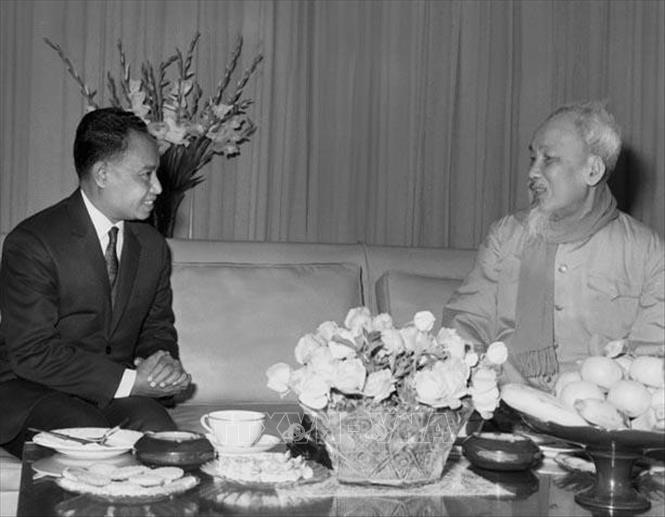
priceless-stories.org – Prince Norodom Phurissara (1919–1976) was a distinguished member of the Cambodian royal family whose life was marked by both service to his country and a tragic end. Born during a time of political upheaval in Cambodia, he played a significant role in the nation’s history, particularly in the areas of governance, diplomacy, and royal duties. His life and legacy, while cut short by the turmoil of the Khmer Rouge era, remain influential in understanding the complex history of Cambodia in the 20th century.
Early Life and Education
Prince Norodom Phurissara was born in 1919 as a member of the esteemed Norodom branch of the Cambodian royal family. He was raised in a period when Cambodia was under French colonial rule, and the royal family’s role was largely ceremonial, with limited political power. Despite this, Prince Phurissara was groomed for a leadership position, receiving an education that combined traditional Cambodian teachings with Western influences. This education laid the foundation for his later involvement in the country’s politics and his support for modernization efforts.
During his youth, Prince Phurissara was exposed to both the challenges of living under colonial rule and the growing nationalist sentiments that were sweeping through Southeast Asia. His understanding of global politics and his royal lineage positioned him as a future leader who could guide Cambodia through turbulent times.
Role in Cambodian Politics
Prince Phurissara’s most notable contributions came during the post-colonial period when Cambodia gained independence from France in 1953. As a member of the royal family, he was involved in the royal court’s activities and had a seat at the political table during a crucial period of nation-building. While the monarchy’s role was largely symbolic, Prince Phurissara’s influence in shaping the country’s trajectory was significant, particularly in the areas of diplomacy and royal duties.
He was also known for his interest in the modernization of Cambodia, working to strike a balance between preserving the rich cultural heritage of his country and promoting social and economic development. Prince Phurissara’s diplomatic skills were put to use in strengthening Cambodia’s relations with other Southeast Asian nations and global powers, a crucial task in a region caught in the Cold War.
Involvement in the Royal Court
As a prominent member of the royal family, Prince Norodom Phurissara took on various ceremonial and administrative roles, often representing the Cambodian monarchy at national and international events. His engagement in these activities helped to maintain the monarchy’s influence and foster a sense of national unity during a period when Cambodia was navigating the complexities of independence and modernization.
However, Cambodia’s political landscape began to shift dramatically in the 1960s and 1970s, with growing political instability and the rise of radical movements that would eventually lead to the fall of the monarchy and the establishment of the Khmer Rouge regime.
The Khmer Rouge Era and Tragic End
The Cambodian royal family’s status changed drastically after the coup in 1970 that ousted King Norodom Sihanouk. The political instability that followed paved the way for the rise of the Khmer Rouge, a radical communist group led by Pol Pot. This regime, which seized power in 1975, launched one of the most devastating genocides in modern history, resulting in the deaths of an estimated 1.7 million people.
Prince Norodom Phurissara, like many members of the royal family, was swept up in the political turmoil of the time. He was arrested and imprisoned by the Khmer Rouge, along with several other royal family members. The regime’s brutal purges targeted intellectuals, political elites, and anyone perceived as a threat to its ideology.
Prince Phurissara’s life came to a tragic end in 1976, during the height of the Khmer Rouge’s reign of terror. He, along with many others, was executed or died under harsh conditions. His death marked the loss of a respected royal figure at a time when Cambodia was undergoing its darkest chapter.
Legacy and Impact
Although Prince Norodom Phurissara’s life was tragically short, his legacy lives on in Cambodia’s collective memory. He is remembered as a figure who contributed to his country’s modernization efforts and diplomatic relations in the mid-20th century. His dedication to Cambodia’s development and his service to the royal family made him a respected member of the Cambodian elite.
In the post-Khmer Rouge period, the role of the monarchy was restored, and the legacy of figures like Prince Phurissara was honored by many who remembered their service and sacrifice. His tragic death underscored the brutal impact of the Khmer Rouge regime, which not only destroyed a generation of Cambodians but also erased much of the intellectual and political elite of the nation.
Conclusion
Prince Norodom Phurissara’s life was one of dedication to his country, service to the royal family, and a commitment to the modernization of Cambodia. Although he was unable to witness Cambodia’s post-Khmer Rouge rebuilding efforts, his legacy remains an important part of the country’s history. His tragic end serves as a reminder of the horrors of the Khmer Rouge period and the devastating impact it had on Cambodia’s royal family, intellectuals, and national leaders.
Today, Prince Phurissara is remembered as a symbol of service and sacrifice, and his contributions to Cambodia’s national development continue to inspire those who seek to build a better future for the nation.