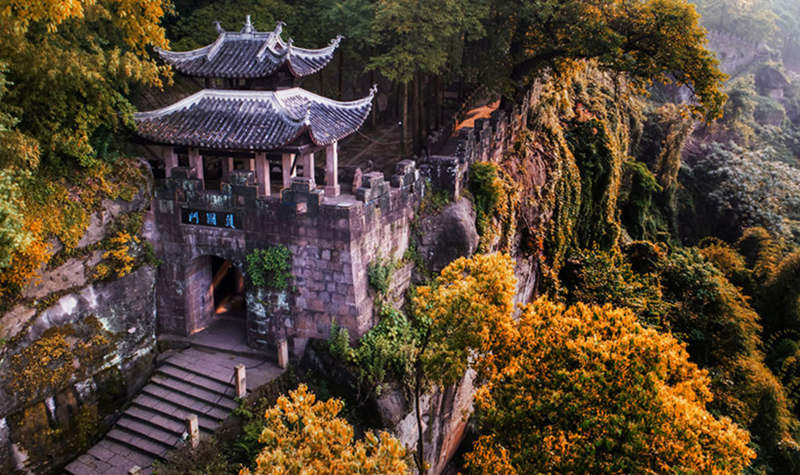
priceless-stories.org – The Diaoyu Fortress, also known as Diaoyucheng, is a remarkable historical site located on Diaoyu Mountain in the Hechuan District of Chongqing, China. This fortress is renowned for its defensive prowess and its role in resisting Mongol invasions during the Song Dynasty. Today, it stands as a testament to ancient military strategy and architectural ingenuity.
Historical Background
Construction and Strategic Importance
The construction of the Diaoyu Fortress began in the 13th century during the Southern Song Dynasty. It was strategically positioned on a hilltop, providing a vantage point over the surrounding area and the Jialing River. The fortress was designed to be a formidable defensive structure, with massive walls, watchtowers, and complex entrances that made it nearly impregnable.
The Mongol Siege
One of the most notable events in the history of the Diaoyu Fortress was its resistance to the Mongol armies. In 1259, the Mongols, led by Möngke Khan, launched a major assault on the fortress as part of their campaign to conquer the Song Dynasty. Despite being heavily outnumbered, the defenders of Diaoyu Fortress withstood the siege for several months. The fortress’s robust defenses and the defenders’ resilience played a crucial role in halting the Mongol advance, marking a significant moment in Chinese military history.
Architectural and Defensive Features
Ingenious Design
The Diaoyu Fortress is characterized by its sophisticated design, which incorporates natural terrain and man-made fortifications. The walls are built from locally sourced stone, providing strength and durability. The fortress’s layout includes multiple layers of defense, such as moats, gates, and battlements, which were meticulously planned to maximize defensive capabilities.
Preservation and Restoration
Efforts have been made to preserve and restore the Diaoyu Fortress, ensuring that its historical and cultural significance is maintained. Archaeological excavations have uncovered various artifacts, providing insights into the lives of the people who lived and fought there. Preservation efforts aim to protect the fortress from environmental damage and promote it as a cultural heritage site.
Cultural and Historical Significance
The Diaoyu Fortress is not only a symbol of military strength but also a representation of the indomitable spirit of the people who defended it. It serves as a reminder of the resilience and determination that characterized the Song Dynasty’s resistance against foreign invasions. The fortress is an important cultural relic, attracting historians, tourists, and researchers interested in exploring China’s rich historical legacy.
Modern-Day Relevance
Tourist Attraction
Today, the Diaoyu Fortress is a popular tourist destination, drawing visitors from around the world who are fascinated by its history and architectural beauty. Guided tours offer insights into the fortress’s strategic design and the historical context of its defense against the Mongols.
Educational Resource
The fortress also serves as an educational resource, providing valuable lessons in historical military strategy and ancient engineering techniques. It is an ideal site for students and scholars studying Chinese history, military science, and architecture.
Conclusion
The Diaoyu Fortress stands as a monumental testament to the ingenuity and resilience of ancient Chinese civilization. Its storied past and architectural brilliance continue to captivate and inspire, offering a window into the challenges and triumphs of a bygone era. As we explore this historic site, we gain a deeper appreciation for the courage and creativity that define China’s cultural heritage.