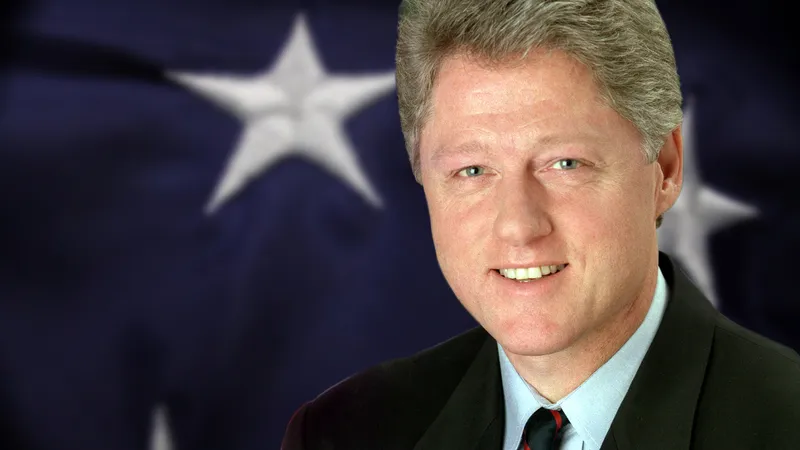
priceless-stories.org – William Jefferson Clinton, known as Bill Clinton, served as the 42nd President of the United States from 1993 to 2001. Widely regarded as one of the most skilled politicians of the late 20th century, Clinton’s presidency was marked by significant economic prosperity, controversial political events, and transformative shifts in both domestic and foreign policy. Known for his charisma, political acumen, and complex legacy, Clinton remains a prominent figure in American political history.
In this article, we will explore Clinton’s life, rise to power, presidency, and the enduring impact of his time in office on the United States and the world.
Early Life and Education: From Hope to Harvard
A Humble Beginning in Hope, Arkansas
Bill Clinton was born on August 19, 1946, in Hope, Arkansas, a small town in the southern United States. His early life was shaped by hardship and perseverance. Clinton’s biological father, William Jefferson Blythe Jr., died in a car accident before he was born, and he was raised by his mother, Virginia Kelley, who later remarried. Clinton’s stepfather, Roger Clinton Sr., was often absent, and Clinton’s family faced economic struggles during his formative years.
Despite these challenges, Clinton excelled academically and was active in extracurricular activities. He developed a deep interest in politics and was inspired by the speeches of John F. Kennedy, whose presidency Clinton viewed as a beacon of hope and public service. As a teenager, Clinton moved with his family to the town of Hot Springs, Arkansas, where he attended high school and cultivated a passion for public speaking and leadership.
A Promising Academic Path: Georgetown and Oxford
Clinton’s academic success opened doors to prestigious opportunities. He attended Georgetown University in Washington, D.C., where he earned a degree in international affairs. At Georgetown, Clinton was involved in student government, honing his leadership skills and developing an interest in political science.
After graduating from Georgetown in 1968, Clinton received a Rhodes Scholarship to study at the University of Oxford in England, where he focused on philosophy, politics, and economics. It was at Oxford that Clinton became involved in political activism, engaging in debates about the Vietnam War and other global issues. His time at Oxford further solidified his aspirations for a political career and deepened his commitment to public service.
Upon returning to the United States, Clinton attended Yale Law School, where he earned his law degree. It was at Yale that he met Hillary Rodham, a fellow law student who would later become his wife. The two shared a strong intellectual bond and a shared commitment to social justice and progressive causes. After graduating from Yale in 1973, Clinton returned to Arkansas and began his career in law and politics.
Rise to Political Power: Governor of Arkansas
A Promising Political Start
Clinton’s political career began in earnest in 1974 when he ran for the U.S. House of Representatives. Though he lost that race, Clinton’s determination and political savvy earned him a reputation as a rising star in Arkansas politics. In 1976, he was elected as the Attorney General of Arkansas, a position that gave him valuable experience in state-level governance and law enforcement.
In 1978, at the age of 32, Clinton was elected Governor of Arkansas. His victory marked the beginning of a long and successful political career at the state level. Clinton’s time as governor was marked by a focus on education, economic development, and social reform. He implemented progressive policies aimed at improving Arkansas’ economy, particularly in rural areas, and worked to expand access to education and healthcare.
Clinton’s popularity in Arkansas grew, and he was re-elected as governor several times. His time as governor helped him develop a reputation as a pragmatic politician who was willing to work across party lines to get things done. His success in Arkansas set the stage for his eventual run for president in 1992.
The 1992 Presidential Election: The Rise of “The Comeback Kid”
A Charismatic Candidate
In 1992, Bill Clinton made the decision to run for the presidency as the Democratic nominee. He faced a crowded field of Democratic contenders, including incumbent President George H.W. Bush and independent candidate Ross Perot. Clinton’s campaign was built around themes of change, economic opportunity, and the promise of a new direction for the country.
Clinton’s political platform focused on addressing the economic challenges of the time, particularly the recession and high unemployment rate. He also championed progressive policies on healthcare, education, and social welfare. His charisma, strong communication skills, and ability to connect with voters, particularly working-class Americans, helped him gain widespread support.
The 1992 election was marked by a challenging economic climate, with many Americans feeling dissatisfied with the direction of the country under President Bush. Clinton’s ability to articulate a vision for economic recovery and his appeal to a wide range of voters helped him secure the Democratic nomination.
The Election Victory and the “New Democrat” Vision
In the general election, Clinton faced off against incumbent President George H.W. Bush. The election was a bitter contest, but Clinton’s message of hope and renewal resonated with voters. Clinton’s ability to adapt to the changing political landscape, particularly with his embrace of moderate policies, allowed him to win the presidency with a plurality of the vote—43%—despite strong third-party challenges from Ross Perot.
Clinton’s victory in 1992 marked the emergence of a new era in American politics. He positioned himself as a “New Democrat,” rejecting traditional liberal policies in favor of more centrist, pragmatic approaches to governance. His victory represented a shift away from the Reagan-era conservatism that had dominated the 1980s and signaled a new direction for the Democratic Party.
Presidency: Economic Prosperity, Policy Achievements, and Scandals
The Economy and Welfare Reform
Upon taking office in January 1993, Bill Clinton faced a number of economic challenges, including a growing deficit, unemployment, and slow economic growth. One of his first major acts as president was to pass a comprehensive economic package that included tax increases for the wealthiest Americans and significant spending cuts in other areas. The package, while controversial, was aimed at reducing the federal deficit and promoting long-term economic growth.
Clinton’s economic policies, combined with a period of technological innovation and global economic expansion, helped lead to a period of unprecedented prosperity in the 1990s. The U.S. economy experienced strong growth, low unemployment, and a booming stock market. By the end of Clinton’s presidency, the country had achieved a budget surplus for the first time in decades, and the federal deficit had been significantly reduced.
In 1996, Clinton also signed into law the Personal Responsibility and Work Opportunity Reconciliation Act, which implemented sweeping welfare reforms. The law aimed to reduce dependency on government assistance by promoting work and personal responsibility, though it also faced criticism for its impact on vulnerable populations.
Healthcare Reform and the Failed “Hillarycare”
One of Clinton’s most ambitious domestic initiatives was his push for healthcare reform. In 1993, Clinton appointed his wife, Hillary Clinton, to lead a task force charged with developing a comprehensive healthcare reform plan. The proposed plan aimed to provide universal health coverage and reduce the cost of healthcare for Americans.
However, the plan faced fierce opposition from conservatives, the healthcare industry, and even some Democrats. Despite intense lobbying efforts and public advocacy, the proposal was ultimately unsuccessful, and healthcare reform was left unfinished during Clinton’s first term. This failure was a significant political setback, but Clinton’s administration continued to focus on other areas of reform and policy achievements.
The Monica Lewinsky Scandal and Impeachment
Clinton’s second term was marred by the scandal involving his extramarital affair with White House intern Monica Lewinsky. In 1998, Clinton was accused of perjury and obstruction of justice in relation to the affair, leading to a formal impeachment process by the U.S. House of Representatives. Clinton was impeached on charges of lying under oath and obstructing justice but was acquitted by the Senate, and he remained in office.
The Lewinsky scandal tarnished Clinton’s legacy, though he was able to maintain strong approval ratings throughout the impeachment proceedings. The scandal dominated public discourse during Clinton’s second term and led to widespread debates about ethics, power, and accountability in the presidency.
Post-Presidency: Clinton’s Legacy and Global Impact
The Clinton Foundation and Global Philanthropy
Since leaving office in 2001, Bill Clinton has remained active in global affairs through his work with the Clinton Foundation, which focuses on addressing issues such as global health, poverty alleviation, climate change, and economic development. The foundation has been instrumental in bringing together governments, businesses, and nonprofits to tackle some of the world’s most pressing challenges.
Clinton’s post-presidential years have also included advocacy for international cooperation, particularly in areas related to climate change, HIV/AIDS prevention, and sustainable development. His efforts have garnered international praise, though the foundation has also faced scrutiny over its funding sources and potential conflicts of interest.
The Clinton Legacy and Continued Influence
Bill Clinton’s presidency is often remembered for its economic achievements, such as the period of prosperity in the 1990s and the budget surplus, as well as his efforts to balance the federal budget and promote welfare reform. His time in office was also marked by significant international events, such as the NATO intervention in Kosovo and his efforts to broker peace in the Middle East.
However, Clinton’s legacy is complex. While he is praised for his ability to navigate the political landscape and for his economic stewardship, he is also criticized for his handling of certain domestic policies, such as the welfare reforms and criminal justice policies that disproportionately impacted minority communities. The Monica Lewinsky scandal and subsequent impeachment also continue to shape perceptions of his presidency.
Despite these controversies, Clinton remains a respected figure in American politics, with an enduring influence on the Democratic Party. His political legacy and his work through the Clinton Foundation continue to shape global discussions on issues such as poverty, health, and climate change.
Conclusion: A Political Giant
Bill Clinton’s presidency was a transformative period in American history. From his early life in Arkansas to his rise to the White House, Clinton’s career reflects the intersection of ambition, political skill, and a deep commitment to public service. While his time in office was marked by both triumphs and controversies, Clinton’s legacy as a skilled politician, a passionate advocate for global change, and a key figure in shaping the future of the Democratic Party remains firmly intact. As he continues to work on global initiatives and support causes that align with his values, Bill Clinton’s impact on both America and the world remains profound.
